
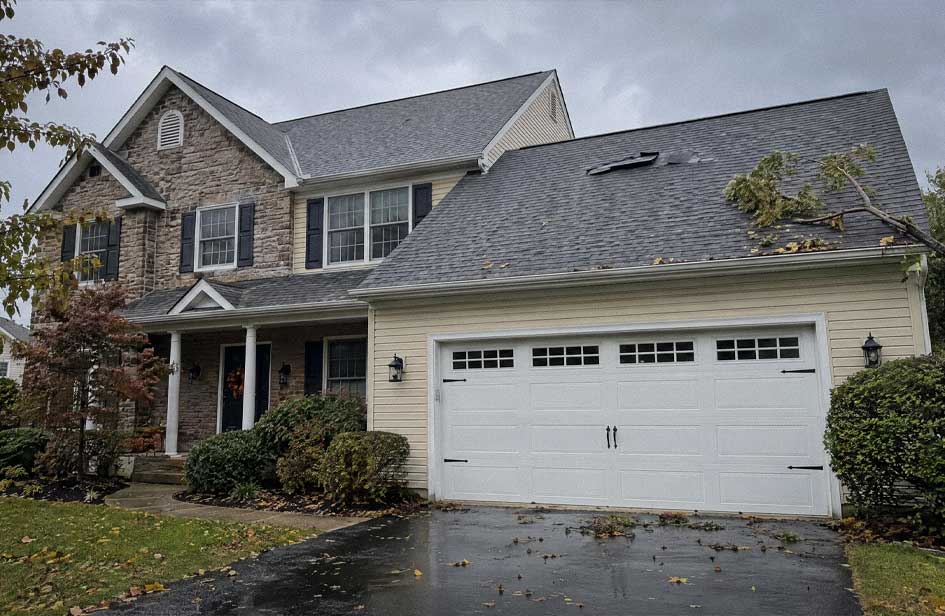
A strong storm moves through. The rain stops, the wind settles down, and when you step outside you notice something that wasn't there before—a shingle in the yard, a branch resting on the roof, a section of roofing that looks uneven, or perhaps a new water stain appearing inside the house.
The first question many homeowners ask is:
“How bad is it?”
The next is usually:
“Does my roof need to be repaired, or does it need to be replaced?”
Those are important questions, but immediately after a storm, the first priority should be safety, documentation, and preventing additional damage.
Here is how to evaluate the situation and better understand what may come next.

Step One: Don't Go Onto the Roof
When roof damage is visible from the ground, it can be tempting to grab a ladder and take a closer look.
Don't.
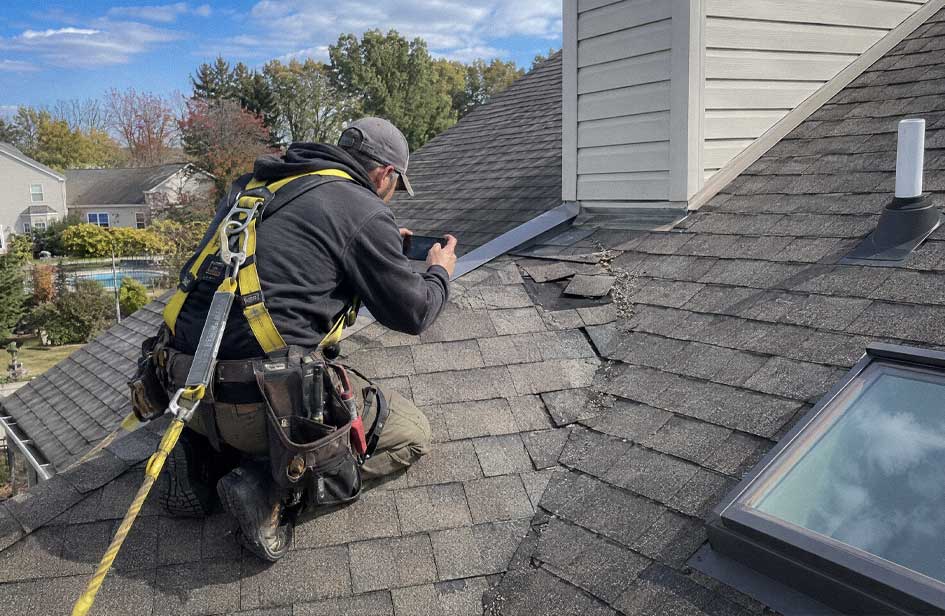
A storm-damaged roof may contain loose shingles, wet surfaces, damaged decking, unstable branches or other conditions that aren't visible from below. Even experienced roofing professionals use appropriate safety equipment and procedures when inspecting a damaged roof.
Instead, begin your inspection from the ground.
Walk around the property only after conditions are safe and look at the roof from several angles. Your smartphone camera or zoom function can help you examine areas that are difficult to see.
Look for missing shingles, shingles that appear lifted or displaced, roofing materials in the yard, fallen branches, damaged flashing, disturbed ridge caps, damaged gutters, or sections of the roof that suddenly look different from surrounding areas.
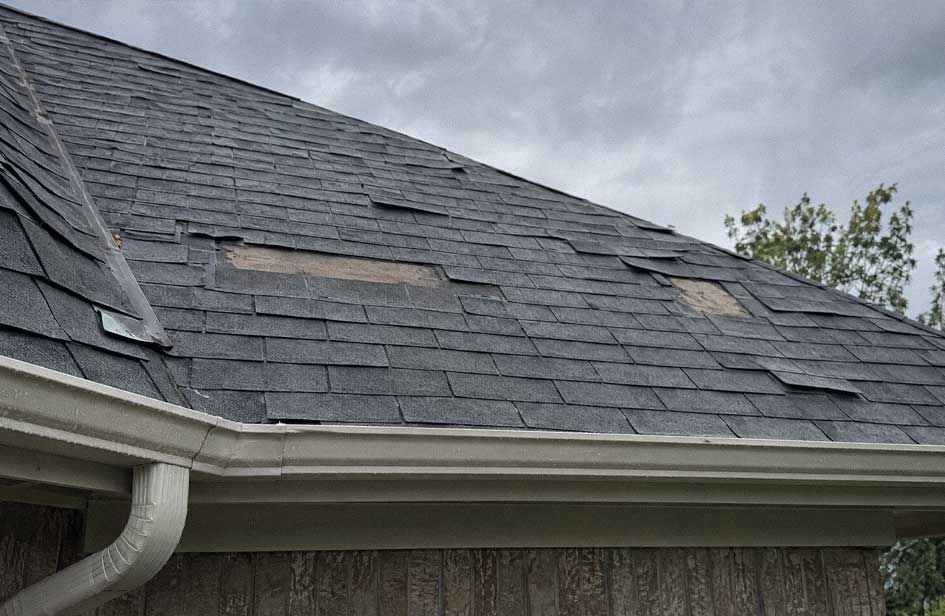
Step Two: Document What You See
Your phone is one of the most useful tools you have immediately after a storm.
Take photographs and video of the property before cleanup or temporary repairs begin, whenever it is safe to do so.
Photograph the roof from several angles. Also document fallen branches, roofing materials on the ground, damaged gutters or siding, and anything else that appears to have changed during the storm.
If shingles or roofing pieces are lying in the yard, photograph where they were found before moving them.
Good documentation can help a roofing professional understand what happened and may also be useful if the damage later needs to be discussed with your insurance company.
Step Three: Look Inside the House
Roof damage isn't always easiest to see from outside.
After a heavy storm, inspect the upper floors of the home and, when it can be accessed safely, the attic.
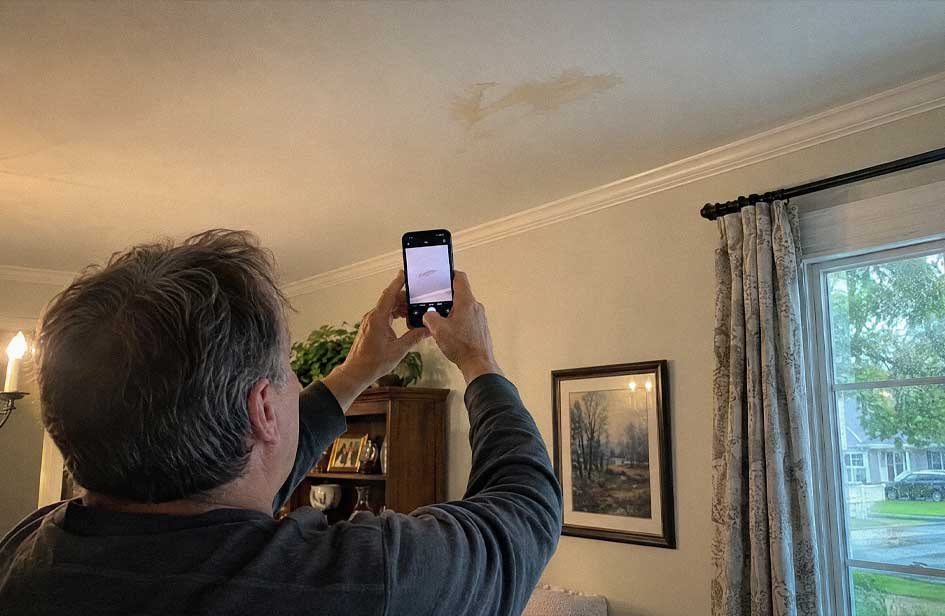
Look for new ceiling stains, damp drywall, dripping water, wet insulation, dark areas on roof decking or rafters, musty odors, or other evidence that moisture may have entered the roofing system.
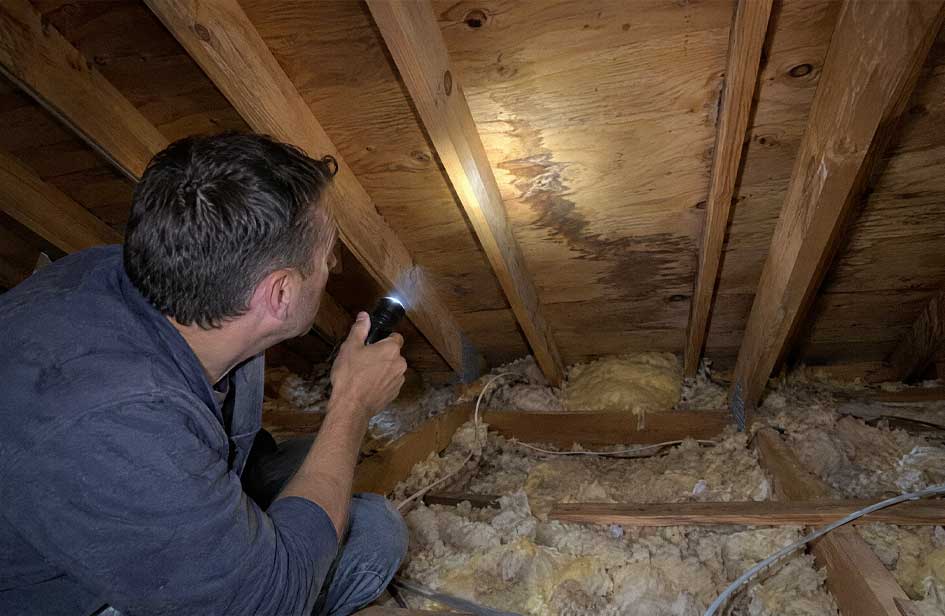
Remember that the location of an interior stain does not necessarily identify the exact location where water is entering the roof.
Water can enter at one point and travel along decking, rafters or other building materials before finally becoming visible inside the home.
That is one reason professional diagnosis is important.
Step Four: Stop Additional Water Damage
If water is actively entering the house, protect the interior wherever it can be done safely.
Move furniture, electronics and valuables away from the affected area and place containers beneath active drips.
If part of the roof has been opened by wind, impact or a fallen branch, temporary weatherproofing may be necessary.
Emergency tarping and exterior storm repairs should generally be performed by an experienced roofing professional rather than a homeowner attempting to climb onto a damaged roof.
Now Comes the Bigger Question: Repair or Replace?
Seeing storm damage does not automatically mean you need an entirely new roof.
Many roofing problems can be corrected with a targeted repair.
The real decision depends on several factors working together: how much of the roof was damaged, the condition of the remaining roofing system, the age of the roof, previous repairs, the condition of the roof deck, and whether replacement materials can be properly integrated into the existing system.
1. How Much of the Roof Is Damaged?
A few damaged shingles in one isolated section are very different from wind damage occurring across several roof planes.
Localized damage may be repairable.
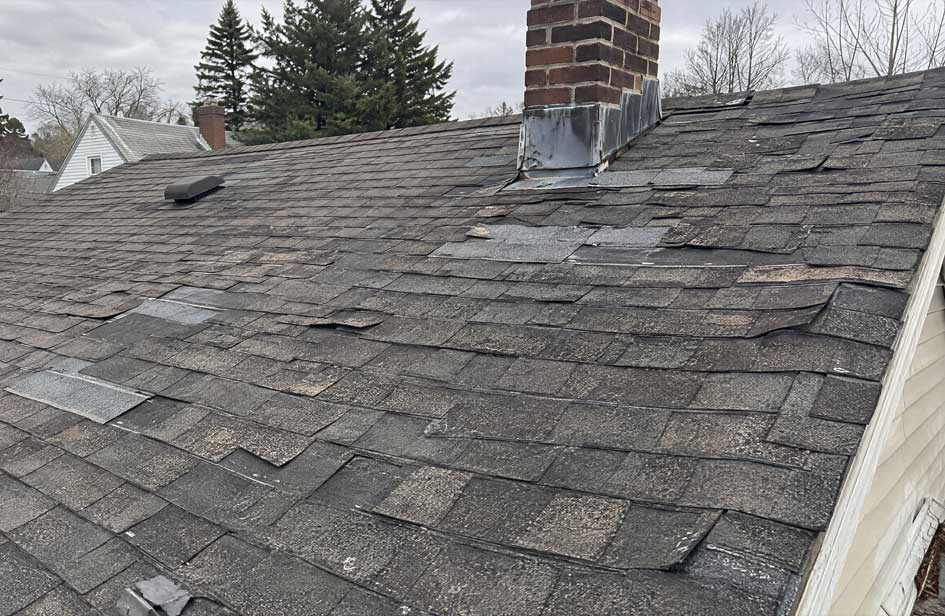
Widespread missing shingles, extensive lifted roofing, multiple leak locations or damage across several areas may make replacement a more practical long-term solution.
The important question isn't simply whether damage exists. It is how extensive the damage is.
2. How Old Is the Existing Roof?
The condition of the roof before the storm matters.
A relatively young roof in otherwise good condition may be an excellent candidate for repair when damage is limited to one area.
An older roof that already has significant wear, granule loss, curling shingles, previous repairs or recurring leaks deserves a broader evaluation.
Repairing storm damage on a roof nearing the end of its useful service life can sometimes mean investing in one problem only to encounter another problem somewhere else later.
Age should never be the only deciding factor, but it is an important part of the overall assessment.
3. Are the Shingles Still in Good Condition?
An asphalt shingle roof gradually changes as it ages.
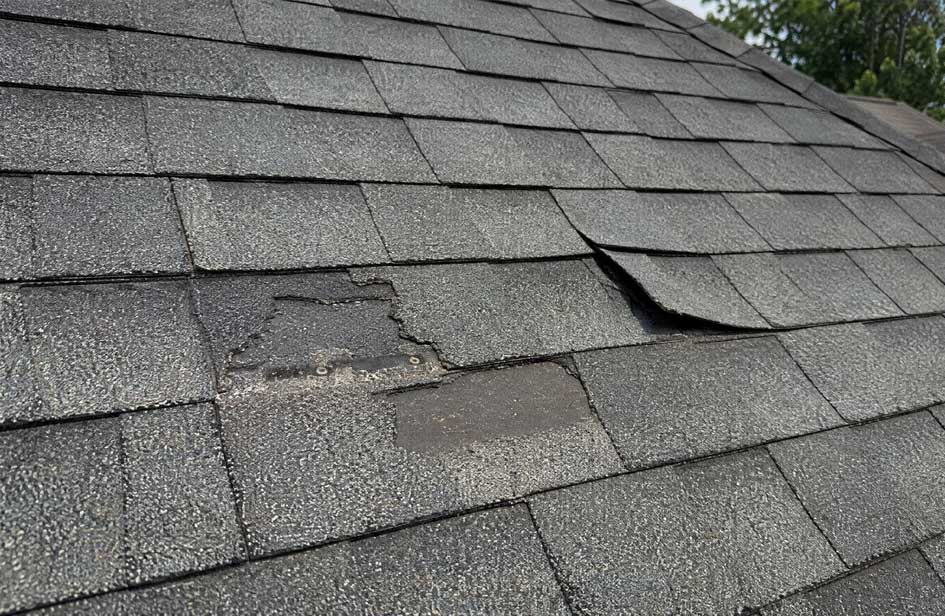
Look for broader signs of deterioration such as significant granule loss, curling edges, cracking, brittle shingles, bald areas, discoloration and repeated shingle loss.
If most of the roof remains healthy and the storm damaged only a limited area, repair may make sense.
When deterioration is occurring throughout the roof, however, storm damage may simply reveal a larger aging problem.
4. What Condition Is the Roof Deck?
The shingles are only the visible portion of a roofing system.
Beneath them are underlayment, roof decking, flashing, ventilation components and other materials that work together to protect the house.
Soft or deteriorated decking, significant moisture damage, sagging areas or repeated water intrusion can change the scope of a roofing project considerably.
A roof should therefore be evaluated as a complete system, rather than simply counting damaged shingles.
5. Is This the First Repair—or One of Many?
Repair history can tell you a lot about a roof.
One isolated leak caused by damaged flashing may have a straightforward solution.
But a roof that has required repeated patching in different locations may be telling you something different.
Ask yourself:
How much have we already invested in keeping this roof going?
Repeated repairs aren't automatically a reason to replace a roof, but they should be considered when comparing the short-term cost of another repair with the longer-term value of replacement.
6. Can the Existing Roofing Be Properly Repaired?
A repair should do more than simply cover a damaged area.
Replacement shingles and roofing components need to integrate correctly with the existing roofing system.
Older or discontinued shingles may also be difficult to match, and years of exposure to sunlight and weather can change the appearance and condition of the existing roof.
A professional roofing contractor should be able to explain how the repair will integrate into the existing system and whether repairing the damaged section can provide an appropriate long-term solution.
When a Roof Repair May Make Sense
Repair is often worth considering when the damage is confined to a relatively small area, the surrounding roofing remains in good condition, the roof has substantial useful life remaining, the roof deck is sound, and the source of the problem can be clearly identified.
When Roof Replacement Deserves Serious Consideration
Replacement should be evaluated when storm damage extends across large portions of the roof, multiple areas are leaking, large numbers of shingles are deteriorated or displaced, the roof was already substantially worn before the storm, or repairs have become increasingly frequent.
Widespread granule loss, cracking, curling, deteriorated flashing and numerous older repair areas can indicate that the issue is no longer isolated.
There isn't one rule that applies to every home.
A good roofing inspection should help you understand why repair or replacement is being recommended.
What a Professional Roof Inspection Should Tell You
After a storm, you shouldn't simply be told, “You need a new roof.”
You should understand what was found.
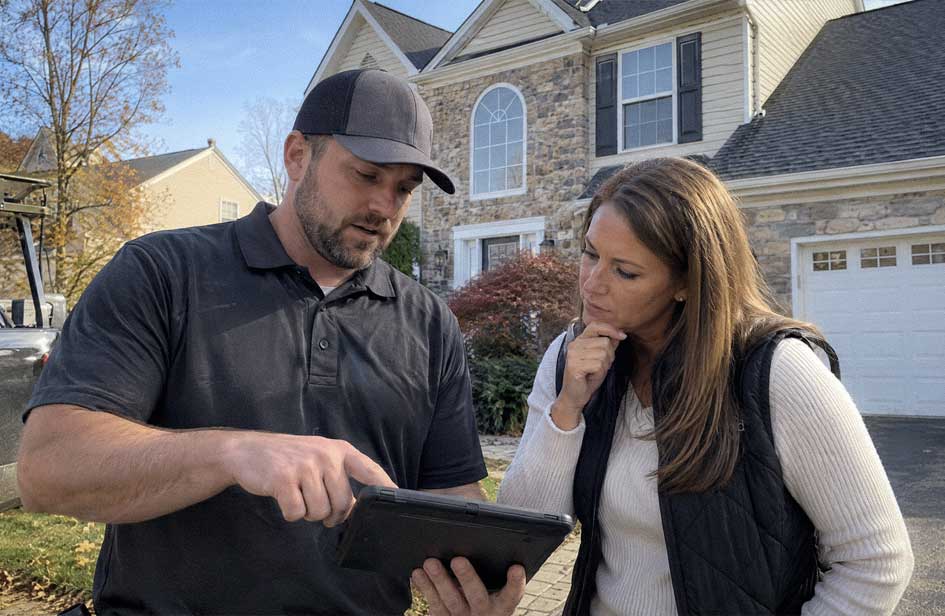
A professional evaluation should identify the areas of concern, explain whether the damage appears localized or widespread, review flashing and roof penetrations, look for evidence of water intrusion, and explain the practical options available.
Ask questions such as:
- Where is the damage?
- Can you show me what you found?
- Is the underlying roofing system affected?
- Can this area be repaired properly?
- What is the condition of the rest of the roof?
- Are there signs of previous damage or repairs?
- If we repair this area, what concerns may remain?
An informed homeowner is in a much better position to make the right decision for the property.
Don't Let Visible Damage Become Hidden Damage
One of the biggest mistakes after a storm is assuming the roof is fine simply because water isn't dripping from the ceiling.
Water intrusion can begin slowly.
A lifted shingle, damaged flashing or relatively small opening may allow moisture into roofing materials before the effects become obvious inside the house.
That is why visible storm damage deserves attention even when there isn't an active leak.
Let Sheppard Exteriors Help You Evaluate Your Roof
If your home has been affected by strong winds, heavy rain, hail or falling debris, Sheppard Exteriors can evaluate the condition of your roofing system and help determine whether repair, maintenance or replacement should be considered.
The goal of a good roof inspection is not simply to recommend a new roof. It is to help you understand what happened, what condition your roof is in today, and what options make sense for protecting your home going forward.
See storm damage? Start with an inspection—not an assumption.
Visit SheppardExteriors.com to learn more or contact Sheppard Exteriors to schedule an evaluation.